Where to Eat
Chengdu's Yulin district is hotpot central. Shu Daxia, Xiaolongkan, and Dezhuang are famous chains — but we take you to the local favourites the tourists never find.
A bubbling cauldron of fire, numbing spice, and pure joy
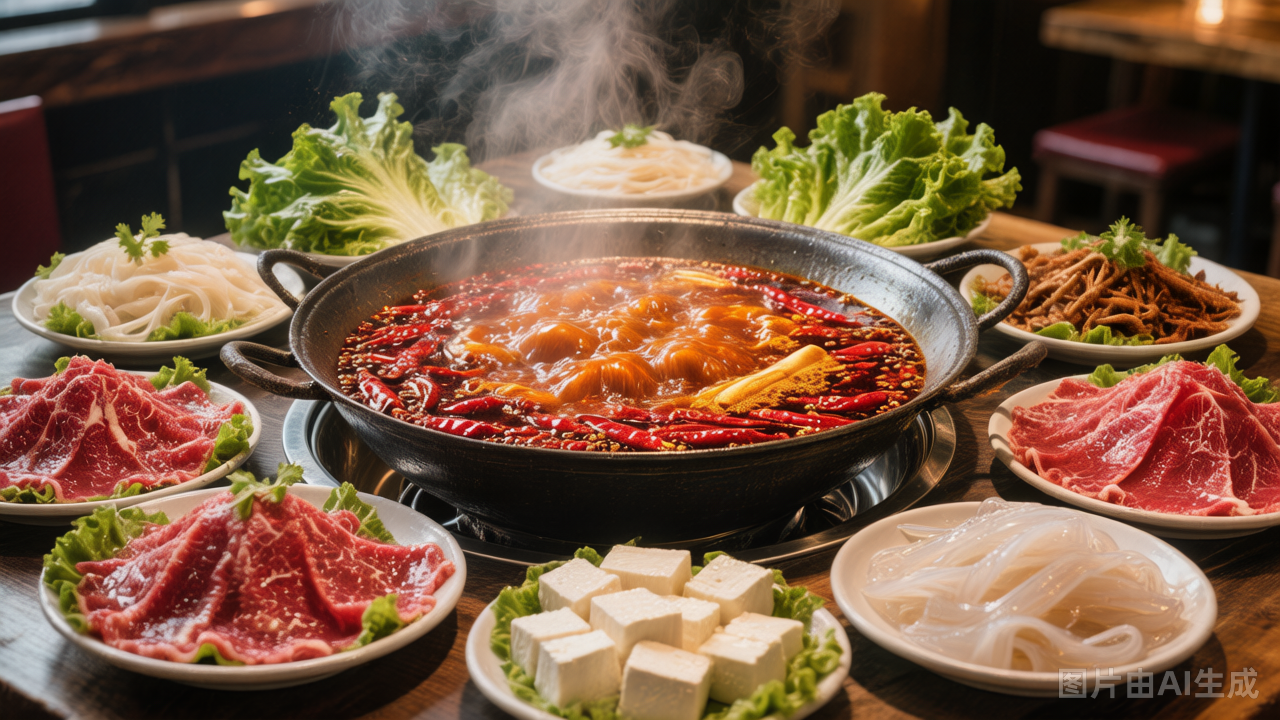
Sichuan hotpot (四川火锅) is not merely a meal — it is a communal ritual, a sensory adventure, and the dish that defines Sichuan's culinary identity. A bubbling vat of crimson broth sits at the centre of the table, fragrant with Sichuan peppercorns, dried chilies, fermented bean paste, and a dozen aromatic spices.
Each diner cooks their own ingredients in the shared pot — thin slices of beef and lamb, lotus root, enoki mushrooms, bean sprouts, tofu skin, and a hundred other possibilities — dipping them briefly, then plunging them into a personal bowl of sesame oil and garlic. The result is an explosion of textures and flavours that is impossible to forget.
Sichuan peppercorns create a tingling numbness (má), while chilies deliver burning heat (là). Together they produce a flavour experience found nowhere else on Earth.
The split pot (鸳鸯锅) lets you enjoy both fiery red broth and mild mushroom or bone broth simultaneously — perfect for mixed-spice-tolerance groups.
Paper-thin beef slices, hand-cut lamb, fresh shrimp paste, duck intestines, ox tripe — the ingredient list is vast, and every table customises its own spread.
Sesame oil, minced garlic, cilantro, oyster sauce, and vinegar — each diner mixes their own. The sauce cools and enriches every bite from the boiling pot.
Hotpot is inherently social. Friends gather around, cook together, share stories over steam and spice. It is the Chinese equivalent of a warm hearth.
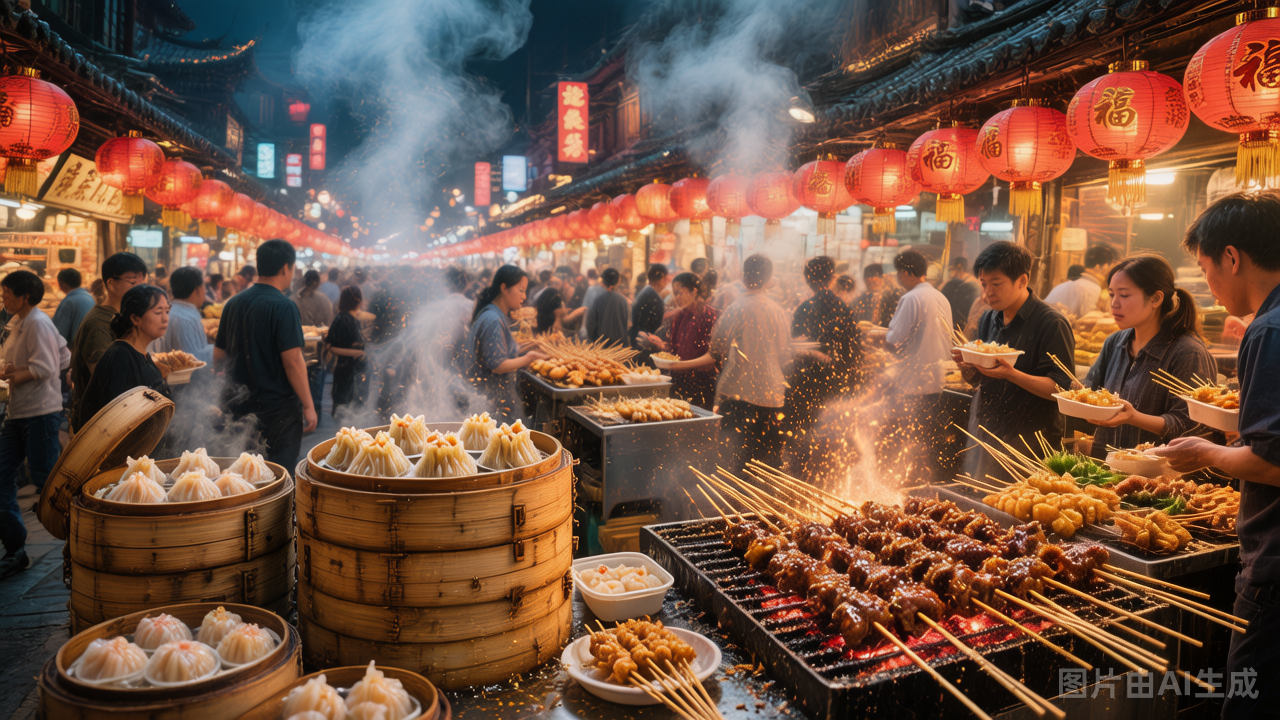
In Chengdu, hotpot doesn't truly begin until after 10 PM. The night hotpot scene — open-air tables, cold beer, steaming pots under neon — is quintessentially Sichuan.
The signature Sichuan hotpot broth. Beef tallow blended with Pixian fermented bean paste (郫县豆瓣), dried chilies, Sichuan peppercorns, and more than a dozen spices. Rich, layered, and fiercely aromatic.
A fragrant, mild broth simmered from pork bones and wild mushrooms. The perfect cooling counterpoint to the red oil — most tables order the split pot (鸳鸯锅) to enjoy both.
A relatively modern invention — tangy, slightly sweet, and rich with fresh tomatoes. Popular with those who prefer flavour over fire, and surprisingly good with beef slices.
For the brave. No mild side. The entire pot is red oil, loaded with extra Sichuan peppercorns and ghost chilies. Ordered mostly by Chengdu locals and culinary thrill-seekers.
Start with a bowl of sesame oil, add minced garlic, cilantro, oyster sauce, and vinegar to taste. This is your personal dipping station.
Drop thin meat slices into the boiling broth for 10–15 seconds. Vegetables and tofu need 1–3 minutes. Don't overcook — the joy is in the freshness.
Transfer cooked food from the pot to your sauce bowl. The sesame oil cools it; the garlic and herbs elevate it. One bite and you understand.
At the end, ladle some broth into a bowl. After all the ingredients have cooked in it, the broth has absorbed every flavour — the grand finale of the meal.
Chengdu's Yulin district is hotpot central. Shu Daxia, Xiaolongkan, and Dezhuang are famous chains — but we take you to the local favourites the tourists never find.
A full hotpot meal costs ¥80–150 RMB per person (approx. $11–21 USD). Premium wagyu or seafood additions can raise this to ¥200+.
Hotpot is eaten year-round — even in 35°C Chengdu summer. Air-conditioned restaurants make it comfortable. Many places open until 3 AM.
Ice-cold local beer (雪花 or 青岛啤酒) is the classic pairing. Soy milk or sour plum juice (酸梅汤) for non-drinkers. Avoid cold water — it worsens the spice.
Mao du (毛肚 — ox tripe), huang hou (黄喉 — ox aorta), duck blood curd, lotus root, enoki mushrooms, and hand-cut beef slices.
Every Inner China journey includes at least two hotpot experiences — one at a premium restaurant, one at a midnight street-side spot. This is not optional. This is essential.
Enquire Now Kung Pao Chicken →