Where
During your Zen retreat at a Sichuan monastery — meals are included and served in the temple dining hall alongside monks.
Eat what the monks eat — simple, mindful, and deeply nourishing
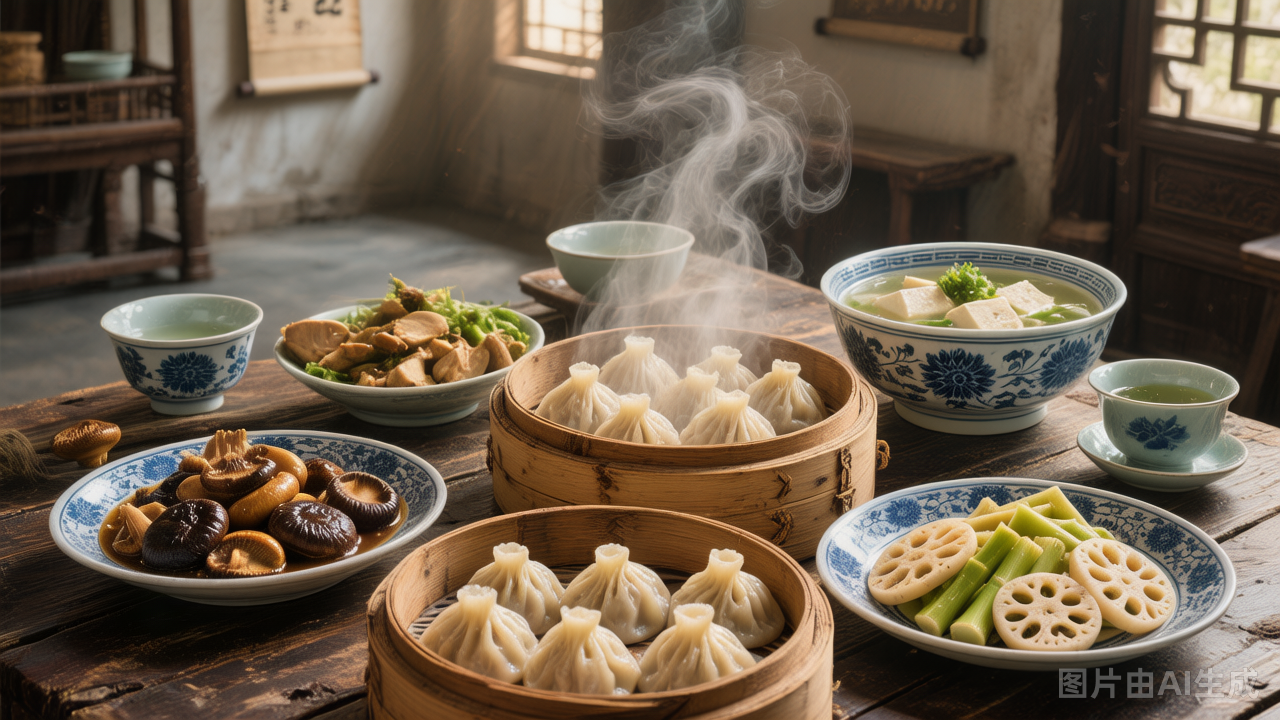
Temple vegetarian cuisine (素斋, sù zhāi) is the food of Chinese Buddhist monasteries — prepared without meat, garlic, onions, or any allium vegetables (which Buddhists believe inflame desire and anger). For 2,000 years, monks have refined these dishes into something extraordinary: food that nourishes the body while quieting the mind.
During your Zen retreat, you will eat these meals alongside the monks — the same bowls, the same silence, the same mindfulness. Breakfast is rice porridge (粥) with pickled vegetables. Lunch is the main meal: tofu, mushrooms, seasonal greens, and mock-meat dishes crafted from wheat gluten and soy. Dinner is light — often just tea and fruit. The simplicity is the point.
Each bite is taken with full attention — no talking, no distractions. The meal itself becomes meditation. Taste becomes vivid when the mind is still.
Monastery food follows the seasons strictly — spring shoots, summer gourds, autumn mushrooms, winter roots. Eating with nature, not against it.
A brief chant before each meal gives thanks for the labour that produced the food. This 30-second ritual transforms a meal into an act of awareness.
Every grain of rice is eaten. Every vegetable is used entirely — stems, leaves, roots. Wasting food is contrary to Buddhist principles of respect for life.
Mushrooms, fermented soy, seaweed, and slow-simmered vegetable stocks create depth and richness that rival any meat-based cuisine — naturally.
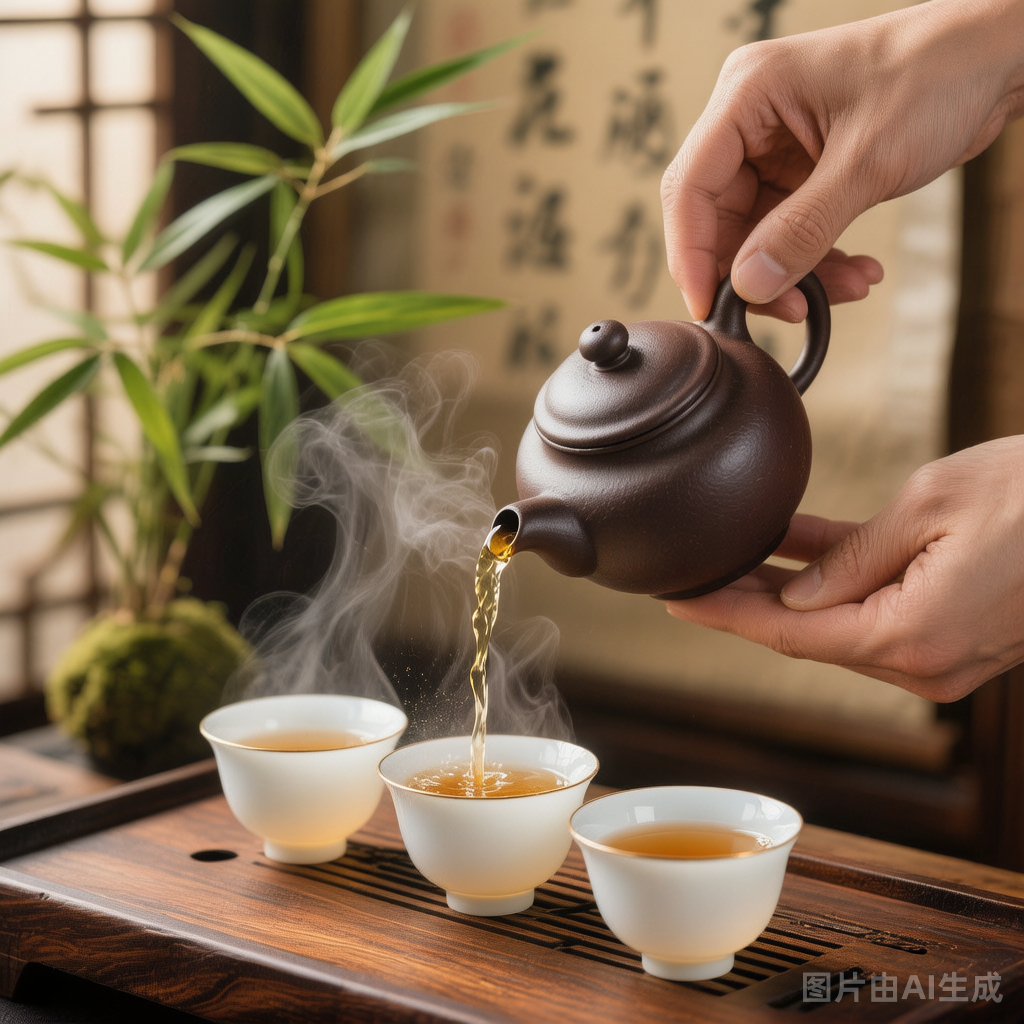
Every temple meal ends with tea — not as beverage, but as the final note of the meal. A warm, bitter, clean finish that settles the stomach and the spirit.
Slow-cooked rice congee with red dates, goji berries, and lotus seeds. Eaten at dawn before morning chanting — warm, gentle, and perfectly simple.
Firm tofu slow-braised in mushroom soy broth with bamboo shoots, ginkgo nuts, and wood ear mushrooms. Rich, savoury, and deeply satisfying without a trace of meat.
The signature temple dish — a medley of 18+ vegetarian ingredients including lily buds, cloud ear fungus, lotus root, snow peas, and mock meats crafted from wheat gluten.
Whatever is in season, simply prepared — bitter melon in summer, daikon in winter. The purest expression of monastery cooking: let the vegetable speak.
During your Zen retreat at a Sichuan monastery — meals are included and served in the temple dining hall alongside monks.
Meals are eaten in silence — no speaking, no phones. This is not a rule to suffer through; it's the key that unlocks the experience.
Hold your bowl with both hands. Eat everything you take. When finished, rinse your bowl with tea and drink it — nothing wasted.
Breakfast: 6:00 AM after chanting. Lunch: 11:30 AM (the main meal). Many temples skip dinner entirely — tea and fruit only.
Temple vegetarian cuisine is included in every Inner China journey that features a Zen retreat. Two days of mindful eating that will change how you think about food forever.
Enquire NowSichuan Hotpot →